The operational guidelines for the 2026/27 Farm Inputs Subsidy Programme (Fisp) make the production and use of Mbeya organic fertiliser compulsory.
Some 610 931 smallholder farmers will receive subsidised inorganic fertiliser and certified seed directly while a further 1.2 million are to be reached indirectly through compulsory integration of Mbeya, with extension workers instructed to guide its preparation and application. This comes as the budget allocation falls from K241 billion to K111 billion.
That combination, rather than the merits of any single product, is what concerns us.
When the budget is more than halved and a product of variable and unverified nutrient content is made a condition of participation, Mbeya ceases to function simply as an optional soil-health intervention and risks functioning instead as a substitute for mineral fertiliser no longer being provided through the programme.
Our position is, therefore, a narrow one. Mbeya deserves investigation and promotion as a soil health initiative. It does not belong inside the subsidy.
Malawi’s investment in agricultural science was deliberate. At independence, Malawi inherited little in terms of mineral wealth or industrial infrastructure. Unlike Zambia, whose economy was supported by copper, or Zimbabwe, which possessed a broader commercial agricultural and mining base, Malawi’s greatest national asset was its agricultural land and the millions of people whose livelihoods depended on it.
Successive governments built the Chitedze, Bvumbwe, Lunyangwa, Makoka and Chitala research stations and trained scientists whose task was to ensure that recommendations reaching millions rested on evidence rather than assumption.
The maize fertiliser recommendation was one of the clearest products of this investment in agricultural science. For decades, farmers were not simply advised to “apply fertiliser”, recommendations specified the type, quantity and timing of application. The long-standing recommendation was two 50 kilogrammes (kg) bags of basal fertiliser at planting, followed by three 50kg bags of urea as top dressing per hectare, supplying roughly 90kg of nitrogen alongside other essential nutrients.
The formulation of the basal fertiliser has changed over time from the earlier DAP-based recommendation, to 23:21:0+4S and more recently to 23:10:5+6S+1Zn as research, soil fertility concerns and production conditions evolved.
These recommendations were never beyond debate, nor were they expected to remain unchanged. What mattered was the process behind them: changes were informed by soil surveys, field trials and economic evaluation aimed at determining what farmers could apply, what crops would respond to and what remained economically viable for the smallholder.
Two principles were fundamental: a recommendation had to withstand scientific evaluation and it had to tell the farmer how much to apply. This is not an argument against organic fertilisers or integrated soil fertility management. Organic and organo-mineral amendments have an established place in soil fertility management, particularly through their contribution to soil organic matter and the recycling of locally available nutrients.
The argument behind Mbeya is, therefore, entirely plausible. Combining locally available organic materials with smaller quantities of mineral fertiliser could improve soil condition while reducing farmers’ dependence on purchased inputs. But scientific plausibility is not the same as a national recommendation.
Before a practice is prescribed to farmers at scale, there is need to know what it contains, how much should be applied, under what conditions it works and whether farmers can realistically produce and apply the required quantities.
The problem is that the evidence available for Mbeya in Malawi does not yet appear to meet that standard. We could find no published multi-location, multi-season and independently replicated evaluation demonstrating how Mbeya performs across Malawi’s different soils and growing conditions.
The principal published work from the Department of Agricultural Research Services (Dars) compares original and modified Mbeya formulations with the recommended inorganic fertiliser rate and provides an important starting point for further investigation. But evidence from a limited set of experiments is not the same as evidence for national-scale recommendation. It is certainly not enough, on its own, to justify making the practice compulsory for more than a million farming households.
The most consequential omission in the published work is also one of the simplest: the application rate. The Dars study reports maize yields of six tonnes under Mbeya treatments per hectare, but nowhere states how much was applied to achieve those yields. Without that information, the results cannot be meaningfully interpreted, replicated or translated into a recommendation for farmers.
A yield figure alone is not an application recommendation. There is need to know whether six tonnes of maize required 500kg, one tonne or several tonnes of Mbeya per hectare because each of those quantities carries different implications for nutrient supply, labour, transport, availability of ingredients and cost.
The formulation of the mineral fertiliser used in preparing Mbeya should also be clearly stated, particularly because Malawi’s recommended basal fertiliser has changed over time. Before a result of this magnitude is used to support national-scale promotion, the basic question must, therefore, be answered: how much Mbeya was applied per hectare to produce it?
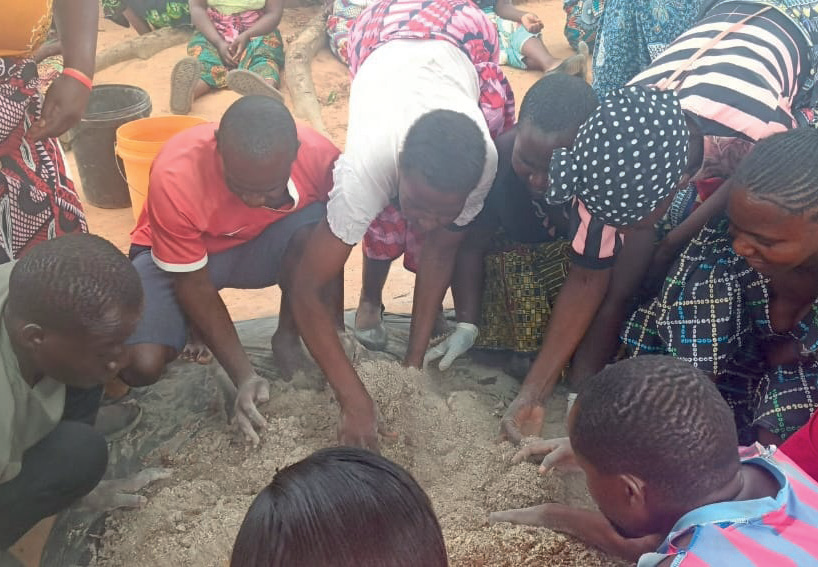
Six tonnes per hectare is roughly three times the national smallholder average and is comparable to, or higher than, yields typically achieved on research stations using the full recommended inorganic fertiliser rate. This makes the amount of Mbeya applied particularly important. A widely promoted 50kg Mbeya formulation contains approximately 21kg of maize bran, 10kg of animal dung, ash, water and about 10kg of mineral fertiliser.
Where that mineral portion is NPK rather than urea, the finished blend carries under five percent nitrogen, some of which may also be lost through volatilisation during fermentation as the ash raises the pH. The study should also state which NPK was used in the blend and in the control, since the national basal fertiliser changed midway through the period the work covers.
By comparison, a six-tonne crop takes up in the order of 140kg of nitrogen. Even allowing generously for nitrogen supplied by the soil and other ingredients, a simple nutrient-balance calculation suggests that three to four tonnes of Mbeya per hectare, a simple nutrient-balance calculation suggests that three to four tonnes of Mbeya per hectare, equivalent of three to four tonnes of Mbeya per hectare, or 60 to 80 bags, would be needed to deliver it which is practically impossible.
For an ordinary smallholder farmer, preparing, transporting and applying such quantities would be extremely difficult.
This makes the omission of the application rate from the published study particularly consequential: without knowing how much Mbeya was actually applied, it is difficult to assess whether the reported yield is both agronomically plausible and practically achievable.
Formulations also vary between batches and seasons, with no guaranteed analysis or labelling standard governing them. Nor are the ingredients free. Maize bran is livestock feed with an alternative use, households without livestock cannot source dung and the labour falls largely on women.
One part of the reform we welcome without reservation is the shift in implementation to farmer organisations under the Decentralised Agricultural Extension Services System.
Farmer organisations reach where a thin officer network cannot. They hold local knowledge of who farms and who is in need, which makes beneficiary identification harder to capture politically. But extending reach is not the same as providing technical assurance.
A farmer organisation can mobilise farmers, organise training and convene demonstrations. It cannot, without the necessary technical capacity and quality-control systems, determine whether a fermented fertiliser blend contains the nutrients it is assumed to contain. Capacity among farmer organisations also varies considerably.
Without adequate training, technical backstopping and an operating budget, transferring additional responsibilities to them, risks shifting the burden of implementation without addressing the underlying capacity gap.
The programme guidelines place responsibility for guiding farmers through this process largely on extension workers. Yet Malawi’s extension service is already severely stretched. Food and Agriculture Organisation has documented Malawian field assistants covering approximately 400 square kilometres and serving around 4 000 farm families each, about eight times the benchmark of one officer to 500 farmers that FAO treats as manageable.
Expecting an already overstretched service to supervise the preparation and use of Mbeya by more than a million additional farmers in a single season, without corresponding increases in staffing and operating resources, is therefore a substantial implementation challenge. If adequate supervision cannot be provided, farmers may end up preparing and applying products that differ considerably from the formulation on which the recommendation is based. The consequences of that variability would ultimately be reflected in crop performance and, at this scale, potentially in national maize production.
Malawi does not need a new process. It has one. The Fertiliser Act of 2023 establishes the Malawi Fertiliser Regulatory Authority to determine what is approved for use and to regulate manufacture, blending and distribution.
The Agricultural Technology Clearing Committee, chaired by Dars, is mandated to approve and release agricultural technologies, including soil fertility technologies, before they reach farmers. If those steps have been completed for Mbeya, the records should be public. If they have not, a compulsory national requirement cannot rest on their absence.
The season ahead sharpens the point. El Niño conditions are established, forecast at close to certainty through the 2026/27 season and historically associated with hotter, drier conditions across southern Africa. Proponents will note, correctly, that organic matter improves moisture retention, which is what a dry season demands. That argument is testable and deserves a hearing. It does not justify imposing an untested requirement on the whole subsidised population in a season of elevated risk.
We, therefore, ask those responsible for the programme to do four things. First, publish the clearance record, the authority’s registration position and the committee’s release decision on Mbeya, or a plain statement that neither exists. Second, publish the application rates behind the reported yields together with independent laboratory analyses of nutrient content and batch-to-batch variability across the formulations being promoted.
Third, commission multi location trials at Chitedze, Bvumbwe, Lunyangwa, Makoka and Chitala research stations over at least two seasons, with protocols published in advance and results released whatever they show. Fourth, remove the compulsory element from the 2026/27 guidelines and fund Mbeya as a distinct soil health programme, with its own budget line, evaluation framework and critically, the extension staffing that supervision requires, so that it can be tested, refined and adopted on merit. Farmers who wish to use it should be encouraged. Those who do not should not lose access to subsidised inputs for that reason.
None of this is opposition to the Mbeya innovation. It is an insistence that innovation should strengthen rather than weaken advisory systems founded on science and innovation, because those systems carry the country’s food security.
*Rachel Isabel Mwachifumya Mkandawire, PhD (plant sciences) and Paul Zauzau Chunga, PhD (agronomy) write in their personal capacities. Neither has a commercial interest in the fertiliser sector or in any product referred to in this article. – RACHEL ISABEL MWACHIFUMYA MKANDAWIRE and PAUL ZAUZAU CHUNGA*
Contributors